
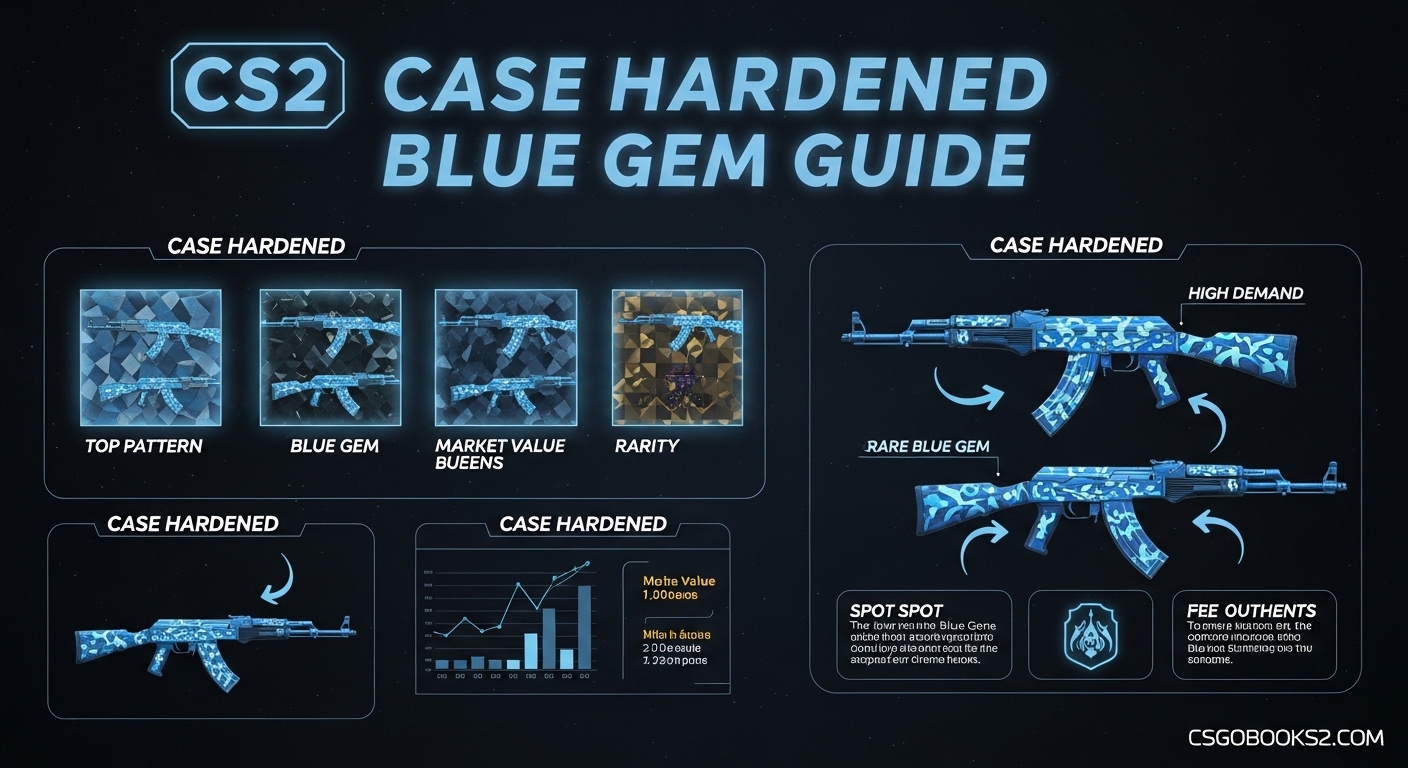
If you’ve ever unboxed a Case Hardened skin and noticed that beautiful blue dominating the blade, you might have found yourself a Blue Gem. These rare pattern variants have transformed ordinary CS2 skins into some of the most valuable collector items in the game. I’ve spent years studying these patterns, and I’m going to share everything you need to know about identifying, valuing, and trading Blue Gems.
In this CS2 case hardened blue gem guide, you’ll learn exactly what makes a Blue Gem special, how to check your pattern number, which weapons have the most valuable patterns, and how to avoid common scams when trading these high-value items. Whether you’re a seasoned collector or just unboxed your first Case Hardened, this guide will give you the knowledge to make smart decisions.
What is a Case Hardened Blue Gem?
A Case Hardened Blue Gem is a rare pattern variant of Case Hardened skins in CS2 that features predominantly blue coloring with minimal gold or purple hues on the play side of the weapon. These patterns are determined by the paint seed number assigned when the skin is created, with only about 14.6% of all Case Hardened patterns qualifying as Blue Gems based on their blue coverage percentage.
What makes Blue Gems so special is their ability to transform a relatively common skin into a collector’s item worth thousands of dollars. The blue coloring comes from the way the Case Hardened finish applies to different weapons, with certain pattern numbers creating stunning blue tops, blue play sides, or even fully blue blades. I’ve seen Factory New Karambits with the right pattern sell for over 100 times their base value.
The rarity of Blue Gems varies significantly by weapon type. Knives have the most valuable Blue Gem patterns due to their larger surface area and visual impact, but even pistols like the Five-SeveN can see significant value increases with the right pattern. Understanding which patterns are desirable and why they’re valuable is the first step to becoming a smart Blue Gem collector.
Understanding Pattern Numbers and Paint Seeds
Every Case Hardened skin in CS2 is assigned a paint seed number between 0 and 999 when it’s created. This seed determines exactly how the blue, purple, gold, and silver colors will be distributed across the weapon. The terms “pattern number,” “paint seed,” and “seed” all refer to this same value, and knowing your pattern is essential for determining if you have a Blue Gem and what tier it belongs to.
I’ve checked hundreds of Case Hardened skins over the years, and the pattern system is fascinating. Two Case Hardened skins with the same wear condition will look completely different if they have different paint seeds. That’s why you’ll see two Factory New Karambit Case Hardened skins listed at vastly different prices—one might be pattern #387 (a top-tier Blue Gem) while the other could be pattern #500 (a non-Blue Gem pattern).
The pattern number is permanently assigned to your skin and cannot be changed. This means that if you unbox a Blue Gem, you’ve permanently received that rare pattern. The challenge is that CS2 doesn’t show you your pattern number anywhere in the default interface, which is why so many players unknowingly trade away valuable Blue Gems without realizing what they have.
Blue Gem Tier System Explained
The Blue Gem community has developed a tier system to classify patterns based on their blue coverage and visual appeal. Understanding this system is crucial because the difference between a Tier 1 and Tier 3 Blue Gem can mean thousands of dollars in value. I’ll break down each tier so you know exactly what to look for.
Tier 1 Blue Gems
Tier 1 Blue Gems represent the pinnacle of Case Hardened patterns. These skins have exceptional blue coverage, often featuring fully blue play sides or dramatic blue tops with minimal gold intrusion. On knives, Tier 1 patterns like the Karambit #387 or Butterfly #447 can command massive premiums over standard Case Hardened prices. These are the patterns that serious collectors chase and that rarely appear on the market.
Tier 2 Blue Gems
Tier 2 Blue Gems still have excellent blue coverage but may have slightly more gold or purple than Tier 1 patterns. The blue is still clearly dominant on the play side, and these patterns remain highly desirable. For many collectors, Tier 2 Blue Gems offer the best balance of visual appeal and relative availability, making them easier to actually purchase when they appear on the market.
Tier 3 Blue Gems
Tier 3 Blue Gems have noticeable blue coverage but with more significant gold or purple elements than higher tiers. The blue is still clearly present and defines the skin’s appearance, but these patterns don’t command the same premiums as Tier 1 or 2. That said, Tier 3 Blue Gems still hold considerable value over non-Blue Gem patterns and remain popular entry points for new collectors.
Tier 4 Blue Gems
Tier 4 Blue Gems represent the minimum threshold for Blue Gem classification. These patterns have some blue coverage but may have significant gold or other colors present. While they’re technically Blue Gems, Tier 4 patterns have much smaller premiums over standard Case Hardened skins. However, for weapons where Blue Gems are rare (like certain pistols), even Tier 4 patterns can see meaningful value increases.
CS2 Case Hardened Blue Gem Guide: Karambit Patterns
The Karambit remains the most iconic Blue Gem weapon in CS2, and for good reason. The curved blade shape showcases Case Hardened patterns beautifully, with top-tier patterns creating stunning all-blue play sides. I’ve seen Karambit Blue Gems appreciate significantly over the years, making them popular both as display pieces and investments.
Pattern #387 – The Holy Grail
Pattern #387 on a Karambit is widely considered the best Blue Gem pattern in CS2. This pattern produces an almost entirely blue play side with minimal gold intrusion, creating one of the most visually striking skins in the game. A Factory New Karambit Case Hardened with pattern #387 is one of the rarest and most valuable skins in existence, with only a handful known to exist in the collector community.
Other Notable Karambit Patterns
Beyond #387, patterns like #62, #413, and #619 also produce exceptional Blue Gems on Karambits. These patterns feature strong blue coverage on the play side with appealing distributions of the secondary colors. While they don’t command the same premium as #387, they remain highly sought after by collectors who want the Blue Gem look without the extreme price tag.
Butterfly Knife Blue Gem Patterns
Butterfly Knives have gained tremendous popularity for Blue Gems due to their large surface area and the way the pattern is displayed when inspecting the knife. The opening animation showcases the entire blade, making a clean Blue Gem pattern truly spectacular. I’ve personally seen Butterfly Blue gems become increasingly popular as alternatives to Karambits.
Pattern #447 – Top Butterfly Blue Gem
Pattern #447 is widely regarded as the premier Butterfly Knife Blue Gem pattern. This seed creates exceptional blue coverage on the play side with beautiful gradient effects. The combination of the Butterfly’s distinctive shape and a top-tier Blue Gem pattern creates one of the most visually impressive skins available in CS2.
Other Valuable Butterfly Patterns
Patterns like #387, #619, and #661 also produce excellent Butterfly Blue Gems. Each has its own unique characteristics in terms of how the blue is distributed across the blade. Some collectors prefer patterns with blue tops, while others prioritize full blue play sides. The best pattern for you depends on your aesthetic preferences and budget.
Five-SeveN Case Hardened Blue Gems
The Five-SeveN Case Hardened offers one of the most accessible entry points into Blue Gem collecting. While pistol Blue Gems don’t have the same absolute value as knife Blue Gems, the Five-SeveN has excellent patterns that can still command significant premiums. I’ve recommended Five-SeveN Blue Gems to many new collectors as a way to learn about patterns without spending thousands.
Pattern #661 – The Five-SeveN King
Pattern #661 on the Five-SeveN creates a beautiful blue-dominated slide with excellent color distribution. This pattern is particularly popular because the blue coverage extends across a significant portion of the visible surface area. While it doesn’t have the extreme value of knife Blue Gems, a well-worn #661 can still sell for several times the price of a standard Five-SeveN Case Hardened.
Other Five-SeveN Blue Gem Patterns
Patterns like #577, #881, and #387 also produce excellent Five-SeveN Blue Gems. The pistol’s smaller surface area means that pattern differences can be subtle, but serious Five-SeveN collectors can quickly identify desirable patterns. These pistols make excellent display pieces and are perfect for players who want to show off their Blue Gem knowledge in-game.
AK-47 Case Hardened Blue Gems
The AK-47 Case Hardened is unique among Blue Gem weapons because the pattern is displayed on both the receiver and the magazine. This creates interesting opportunities for patterns that have blue coverage on both components. I’ve seen AK-47 Blue Gems develop a dedicated following among rifle collectors who appreciate the weapon’s iconic status.
Pattern #661 – AK-47 Blue Gem Favorite
Pattern #661 is widely considered the top AK-47 Case Hardened Blue Gem pattern. This seed produces excellent blue coverage on the receiver with appealing color distribution. The AK-47’s larger surface area compared to pistols means that top-tier patterns can be truly spectacular, with blue dominating the weapon’s appearance when viewed from most angles.
Other AK-47 Blue Gem Patterns
Patterns like #567, #387, and #429 also produce desirable AK-47 Blue Gems. Each has its own characteristics in terms of where the blue is most concentrated. Some collectors prioritize receiver blue coverage, while others look for patterns where both the receiver and magazine have appealing blue elements.
How to Check Your Blue Gem Pattern?
Checking your Case Hardened pattern number isn’t immediately obvious in CS2, but several methods make it straightforward once you know how. I’ve verified hundreds of Blue Gems over the years using these techniques, and I’ll walk you through each method so you can confidently identify your patterns.
Using Pattern Checker Websites
The easiest way to check your pattern is to use a dedicated Blue Gem pattern checker website. These tools allow you to paste your inspect link or enter your inventory information, and they’ll instantly tell you your pattern number and tier. Popular options include CS2 Blue Gem databases and community-maintained pattern lists. I always cross-reference patterns using multiple sources to ensure accuracy.
Steam Inventory Method
You can also find your pattern number through Steam’s inventory system by looking at the inspect link in your browser’s address bar. The pattern information is embedded in this link, though you’ll need to decode it using online guides or tools. This method is free and doesn’t require third-party websites, but it’s more technical than using dedicated pattern checkers.
Third-Party Marketplaces
Marketplaces like Skinport and CSFloat display pattern information for Case Hardened skins, making it easy to verify patterns before purchasing. If you’re buying a Blue Gem, always verify the pattern independently before completing the transaction. I’ve seen sellers misrepresent patterns intentionally or accidentally, so independent verification is essential.
Warning About Fake Patterns
Be cautious of screenshots or videos that claim to show certain patterns without providing inspect links. It’s relatively easy to manipulate images to make a pattern appear more blue than it actually is. Always verify patterns using inspect links or trusted pattern checkers before making any purchasing decisions.
Trading Safety and Common Scams
Trading high-value Blue Gems requires extra caution because these items attract scammers. I’ve been in the CS2 trading community for years, and I’ve seen countless collectors lose valuable Blue Gems to avoidable scams. Protecting yourself starts with understanding the common red flags and verification steps.
Common Blue Gem Scams
The most frequent scam involves pattern switching, where a trader shows you a high-tier Blue Gem during negotiation but switches the inspect link to a lower-tier pattern before the trade. Other scams include fake middlemen, phishing links disguised as pattern checkers, and pressure tactics to rush your decision. Always take your time and verify every detail.
Verification Best Practices
Never trade based solely on screenshots. Always inspect the item in-game or using the official inspect link. Verify the pattern number using multiple sources, and cross-reference the seller’s reputation. If a deal seems too good to be true, it probably is. I’ve turned down numerous “amazing” offers that turned out to be scams.
Safe Trading Practices
Use reputable middlemen for high-value trades, and never click links in chat—always navigate to websites manually. Keep a record of all negotiations, and don’t be afraid to walk away from a deal if anything feels off. The Blue Gem community is relatively small, and scammers quickly develop reputations that follow them.
Market Manipulation Awareness
Be aware that a small number of wealthy collectors can influence Blue Gem prices through strategic buying and selling. While this isn’t inherently a scam, it can create artificial price fluctuations. Do your own research and don’t assume that recent sales always represent fair market value.
Investment Considerations for Blue Gems
Blue Gems have proven to be excellent investments for many collectors, with top-tier patterns appreciating significantly over time. However, investing in Blue Gems requires careful consideration of factors like liquidity, market trends, and your own collecting goals. I’ve advised many collectors on Blue Gem investments, and there are important principles to understand.
Liquidity Challenges
High-value Blue Gems can take months to sell because the pool of potential buyers is relatively small. While a Tier 1 Karambit might have an astronomical listed price, finding an actual buyer at that price can be difficult. Consider your time horizon and be prepared to hold Blue Gems for extended periods if you’re investing.
Market Trends
Blue Gem prices have historically trended upward, but there can be significant volatility. Events like CS2 updates, case openings, and changes in the collector community can all impact prices. Follow market discussions and track sales data to make informed decisions about when to buy or sell.
Chinese Market Influence
Chinese collectors have become major players in the Blue Gem market, with collectors like Aoi King (also known as Newb Rage) owning some of the rarest patterns in existence. This international demand has driven prices higher, particularly for top-tier patterns. Understanding this global market is important for assessing value and demand.
Collecting vs. Investing
The most successful Blue Gem collectors balance investment potential with genuine appreciation for the patterns. If you only care about profit, you might be better off with more liquid investments. But if you love the artistry of rare patterns and enjoy the hunt, Blue Gems offer both aesthetic and financial rewards.
FAQs
What is the best blue gem pattern for Case Hardened?
The best blue gem pattern depends on the weapon type. For Karambits, pattern #387 is widely considered the best, producing an almost entirely blue play side. For AK-47s, pattern #661 is the top choice with excellent blue coverage. Butterfly knives favor pattern #447 for its stunning blue distribution. Each weapon has its own optimal patterns based on how the paint seed interacts with the specific model’s geometry.
Who owns the 1.5 million dollar Karambit?
The famous 1.5 million dollar Karambit Blue Gem is owned by a Chinese collector known as Aoi King (also called Newb Rage). He’s one of the most prominent Blue Gem collectors globally and owns a portfolio that includes multiple top-tier Case Hardened patterns. His collection helped establish the record-breaking valuations for rare Blue Gem patterns and demonstrated the investment potential of these skins.
What is the best blue gem seed in CS2?
There isn’t one single best blue gem seed across all weapons because each weapon model responds differently to paint seeds. Pattern #387 is exceptional for Karambits and butterflies, while pattern #661 shines on AK-47s and Five-SeveNs. The best seed for you depends on which weapon you’re collecting and your aesthetic preferences. Some collectors prioritize blue tops, while others want full blue play sides.
How much is a Tier 3 blue gem worth?
Tier 3 blue gem values vary significantly by weapon type and wear condition. A Tier 3 Five-SeveN in Minimal Wear might sell for around $200-300, while a Tier 3 knife could be worth several thousand. Float value plays a major role in pricing, with Factory New and Minimal Wear commanding the highest premiums. Always check recent sales data rather than listed prices, as asking prices can be inflated.
How rare are blue gems to unbox?
Blue gems represent approximately 14.6% of all Case Hardened patterns, but this varies by weapon type. However, unboxing ANY Case Hardened skin is rare to begin with, and then it needs to be on a desirable weapon with a good pattern. The odds of unboxing a top-tier Blue Gem on a premium knife are extremely low, which is why these patterns command such high prices in the collector market.
Conclusion
Understanding Blue Gem patterns is essential for any serious CS2 collector or trader. This CS2 case hardened blue gem guide has covered the tier system, notable patterns for popular weapons, how to verify patterns safely, and how to protect yourself when trading. Whether you’re looking to invest, collect, or simply appreciate these rare patterns, the knowledge you’ve gained here will help you make informed decisions in the Blue Gem market.
Remember that Blue Gem collecting combines art appreciation, market knowledge, and careful verification. Take your time learning patterns, verify everything independently, and never rush into high-value trades. The Blue Gem community is passionate and knowledgeable, and there’s always more to learn about these fascinating patterns.