
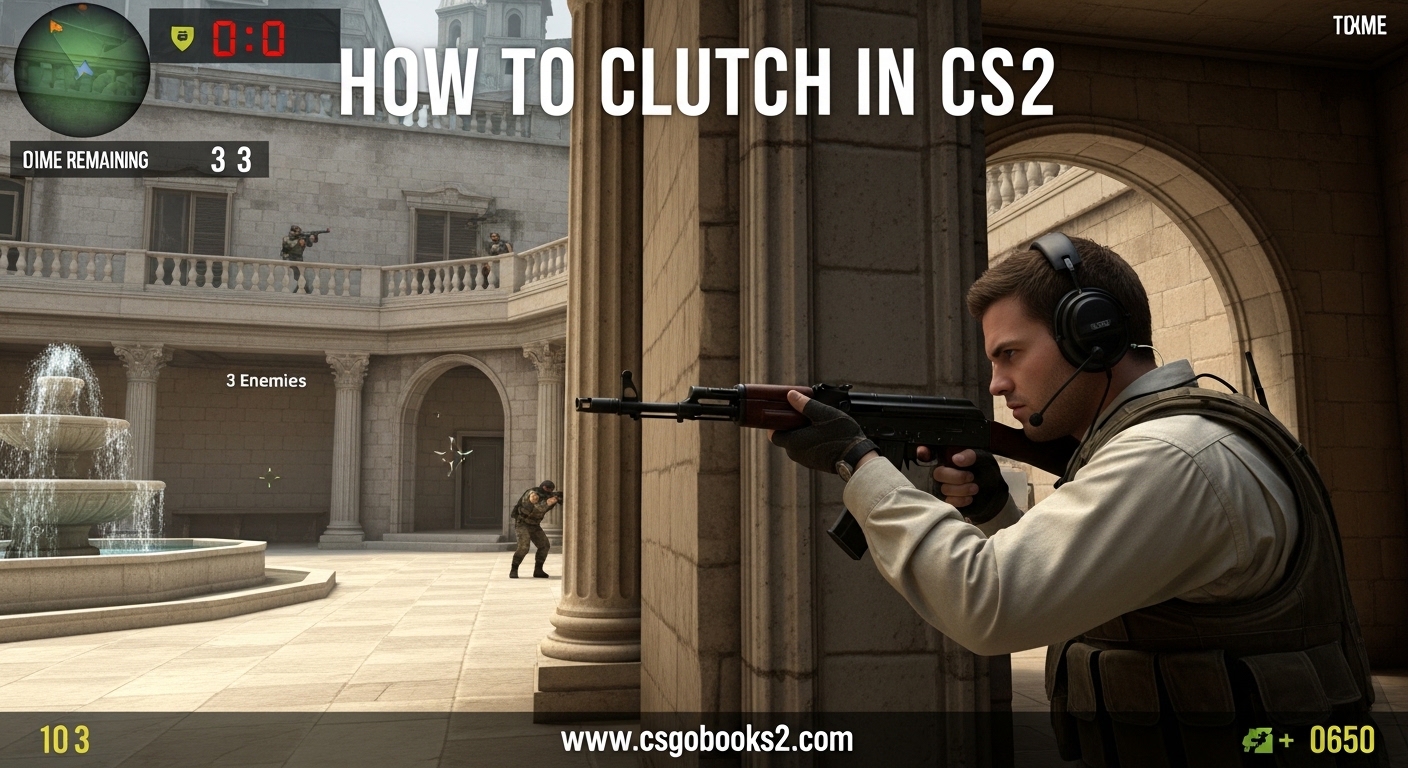
Learning how to clutch in CS2 is one of the most valuable skills you can develop as a player. Those moments when you’re the last one alive against multiple enemies define entire matches and separate good players from great ones. I’ve spent countless hours analyzing clutch scenarios, practicing in retake servers, and studying pro players to understand what really works in these high-pressure situations.
This guide breaks down everything you need to know about clutching in CS2, from the mental game to tactical execution. Whether you’re facing a 1v1 or a 1v5 situation, these principles will help you stay calm, make smart decisions, and win more rounds for your team.
What Is a Clutch Situation in CS2?
A clutch situation occurs when you’re the last surviving player on your team, facing one or more opponents from the enemy team. These scenarios range from 1v1 duels to impossible-seeming 1v5 situations, and they’re some of the most intense moments in competitive CS2.
What makes clutch situations unique is the pressure. When your entire team is watching and the round outcome rests entirely on your shoulders, even experienced players can crumble. The key is understanding that clutching isn’t about miraculous plays—it’s about solid fundamentals, smart decision-making, and maintaining composure when it matters most.
Every player faces clutch situations regardless of rank. From Silver to Global Elite, clutches happen in almost every match. The difference is that better players have developed the mental and technical skills to handle these moments consistently.
The Mental Game: Staying Calm Under Pressure
The biggest enemy in any clutch situation isn’t the opposing team—it’s your own nerves. I’ve watched countless players lose easy 1v1 situations simply because they panicked. When your heart is racing and your hands are shaking, your aim suffers and your decision-making falls apart.
The first step to clutching consistently is learning to manage this pressure. One technique that works well is controlled breathing. Take a deep breath when you realize you’re the last one alive. This simple action calms your nervous system and helps you think clearly instead of reacting impulsively.
Another mental shift that helped me immensely is reframing clutch situations. Instead of feeling the weight of your team’s expectations, recognize that no one actually expects you to win a 1vX situation. This freedom from expectation is powerful—you can play loose, take smart risks, and focus on making good decisions rather than worrying about the outcome.
Dealing with toxic teammates is another mental challenge. When dead players are backseat gaming or being negative, it can destroy your focus. The best approach is to mute voice chat if necessary. Limit communication to absolutely essential information from teammates, and ignore everything else. Your mental space is too valuable in a clutch to let negativity invade it.
Core Clutch Principles That Win Rounds
Successful clutching in CS2 comes down to mastering a few core principles. These fundamentals apply regardless of whether you’re playing T-side or CT-side, and they’re the foundation every good clutcher builds upon.
Sound discipline is absolutely critical. Your ears are often more valuable than your eyes in clutch situations. Every footstep, weapon reload, and defuse sound tells you exactly where enemies are or where they’re going. I recommend crouch-walking whenever possible to minimize your own noise. The moment you give away your position unnecessarily, you lose the element of surprise that makes clutches winnable.
Isolating opponents into 1v1 situations is the single most important clutch skill. Facing multiple enemies simultaneously is nearly impossible, but if you can position yourself to fight them one at a time, your odds improve dramatically. This often means repositioning to create angles where only one enemy can engage you at once, or using utility to delay enemies while you deal with others.
Information gathering is another essential skill. Before committing to any action, gather as much information as possible. Listen for footsteps, check common angles, use shoulder peeks to bait out shots, and consider where enemies were when the clutch started. Good clutches aren’t random—they’re calculated based on information you collect throughout the round.
Repositioning between kills keeps enemies guessing. Many players make the mistake of killing an enemy and staying in the same spot. This makes you predictable and vulnerable to trading kills. After each kill, consider repositioning to a new angle. This forces enemies to search for you again, buying valuable time and creating opportunities for more kills.
Time management varies by situation but is always important. On T-side, you usually want to take your time and let the clock work in your favor. On CT-side with the bomb planted, you often need to be more aggressive. Understanding the timing of each situation helps you make better decisions about when to engage and when to wait.
Reading enemy behavior separates great clutches from good ones. Pay attention to how enemies move, whether they’re aggressive or passive, and what their likely next move will be. If an enemy is pushing aggressively, they might be low on time or impatient. If they’re playing slowly, they might be waiting for you to make a mistake. Use these behavioral reads to anticipate their actions and counter them.
Utility Usage in Clutch Scenarios
Utility is often the difference between winning and losing clutch situations. Many players panic and forget about their grenades when they’re the last one alive, but proper utility usage can single-handedly win rounds that would otherwise be lost.
Molotovs are incredibly powerful in clutches. They deny area, force enemies out of position, and can secure kills without you even needing to aim. I’ve won countless clutches simply by throwing a molotov toward a common angle or bomb site entry point. Even if you don’t get a direct kill, the information you gain from enemies reacting to your molotov is invaluable.
Flashbangs enable aggressive plays when you need to make something happen. A well-placed flash can blind multiple enemies, giving you the window you need to secure critical kills. Just remember that in clutch situations, you often don’t have teammates to follow up on your flashes—so only use them when you can immediately capitalize on the advantage.
Smoke grenades have a special use in clutches called the smoke defuse. This technique involves throwing a smoke directly on top of the bomb, then defusing while hidden inside the smoke cloud. Enemies can’t see you defusing, and if they push through the smoke, you have the advantage of knowing exactly where they’ll appear. This is one of the most effective clutch techniques in the game.
HE grenades can damage multiple enemies before you even engage. A good HE throw can weaken opponents to the point where a single body shot finishes them. In tight clutch situations, this damage can be the difference between winning and losing trades. Just be careful not to damage yourself or limit your own movement with poor grenade placement.
Knowing when to use utility versus when to save it is an important skill. In some situations, using a grenade immediately is the right play. In others, saving that flash or molotov for a specific moment later in the clutch is better. This decision-making comes with experience, but the general rule is to use utility when it gives you a clear advantage and save it when you might need it for a critical moment later.
How to Clutch on T-Side?
T-side clutches typically involve the bomb being planted and you defending against retaking enemies. These situations offer unique advantages if you know how to use them effectively.
Ambiguous plant positioning is a powerful T-side clutch technique. Instead of planting the bomb in the open where it’s easily defused, plant it in a position that forces enemies to expose themselves to check or defuse. Good plant positions make it difficult for enemies to find safe angles to defuse from, giving you opportunities to catch them out of position.
Fake plant techniques can draw enemies out of cover. The sound of planting the bomb often causes anxious CT players to peek or push prematurely. By starting and canceling the plant, or making noise near bomb areas, you can bait enemies into unfavorable engagements. This psychological warfare is especially effective against less experienced players who panic when they hear plant sounds.
Afterplant positioning is crucial for T-side clutches. Once the bomb is down, you want to hold angles that force enemies to expose themselves to you while they try to defuse. Good positions also give you escape routes if enemies use utility effectively. The best afterplant spots balance aggression with safety—you want to be close enough to contest the defuse but far enough to avoid being an easy target.
The deductive process helps you find enemies systematically. Instead of randomly checking angles, use logic to determine where enemies are most likely to be. Consider where they were when you planted, what spots they prefer on this map, and which angles they’ve already checked from. This methodical approach to finding enemies is far more effective than randomly peeking and hoping to get lucky.
Bomb tap timing forces enemies to act. As a T-side clutcher, occasionally tapping the bomb (starting the defuse sound briefly) can cause CT players to panic and push prematurely. This is especially effective late in the round when time is running low. Just be careful not to tap too early or give away a strong position unnecessarily.
How to Clutch on CT-Side?
CT-side clutches usually involve retaking a bomb site that enemies have planted on, or defending against a T-side push. These situations require different strategies and mindsets than T-side clutches.
Kit detection is a valuable CT-side skill. You can actually tell whether enemies have a defuse kit by looking at the wire colors on the bomb. If the wires are blue, green, and yellow, enemies have a kit. If they’re only blue and yellow, they don’t have a kit. This information helps you time your aggression—without a kit, enemies take much longer to defuse, giving you more opportunities to contest.
Fake defuse strategies can bait enemies into peeking. By starting and canceling the defuse, you create sound that draws enemies out of position. This is especially effective when you’re in a strong position and want to catch enemies off guard. Just remember that after a fake defuse, you should reposition immediately since enemies likely know where you are.
Peek timing is critical for CT-side clutches. Many players peek too early and die before they can gather information. Instead, wait for enemies to make mistakes or reveal their positions. The player who peeks second in a CS2 engagement almost always has the advantage—use this to your benefit by being patient and disciplined.
Not making noise after a fake defuse is essential. Many players make the mistake of faking a defuse and then immediately making noise by moving or switching weapons. This defeats the purpose—after a fake, you should stay completely silent and let enemies wonder whether you’re still there. The uncertainty you create is often enough to make enemies play timidly, giving you opportunities to catch them off guard.
Defuse timing varies based on whether enemies have a kit. Without a kit, defusing takes 10 seconds. With a kit, it takes 5 seconds. This difference is massive in clutch situations and should inform your decision-making. If enemies don’t have a kit, you have much more time to be methodical. If they do have a kit, you need to be more aggressive with your timing.
Common Clutch Mistakes That Lose Rounds
Even experienced players make mistakes in clutch situations. Recognizing these common errors can help you avoid them and win more clutches as a result.
Peeking too early is the most common clutch mistake I see. Players get impatient and peek angles before they’ve gathered information or positioned themselves properly. This impatience often leads to unnecessary deaths and lost rounds. Remember: in most clutch situations, time is on your side. There’s no rush to make something happen immediately.
Making unnecessary noise gives away your position constantly. Walking instead of running, crouch-walking when enemies are nearby, and being mindful of sound cues are basic skills that many players forget in clutch situations. Every sound you make tells enemies exactly where you are, removing the element of surprise that makes clutches winnable.
Not checking angles gets you killed from unexpected positions. Many players focus so much on one area that they forget to check other common angles. Good clutches require 360-degree awareness and checking every possible enemy position before committing to any action.
Panic decisions lead to unnecessary deaths. When things go wrong—a shot misses, an enemy appears unexpectedly, or a grenade doesn’t land quite right—many players panic and make impulsive decisions. Learning to stay calm and stick to your plan even when things aren’t going perfectly is what separates good clutches from great ones.
Forgetting about utility wastes valuable resources. I’ve watched countless players lose clutch situations with unused molotovs, flashes, and smokes still in their inventory. These tools can single-handedly win rounds, but only if you remember to use them. Make utility usage a conscious part of your clutch decision-making process.
Training and Practice Methods
Improving your clutch ability requires deliberate practice. Simply playing more matches isn’t enough—you need focused training that targets specific clutch skills and scenarios.
Clutch mode servers like Refrag and Yprac are excellent for training. These servers place you in specific clutch scenarios repeatedly, allowing you to practice the same situations until they become second nature. The repetition builds muscle memory and helps you develop patterns for handling different clutch scenarios. I recommend spending at least 30 minutes a few times per week in clutch mode if you want to see real improvement.
Retake servers simulate realistic clutch scenarios with bomb plants and site retakes. These servers are perfect for practicing both T-side and CT-side clutches in realistic environments. The variety of situations you encounter in retake servers helps you develop adaptability—the ability to adjust your approach based on the specific circumstances of each clutch.
Demo analysis of your own clutches reveals patterns in your play. Recording your matches and watching your clutch situations afterward helps you identify mistakes you might not notice in the heat of the moment. Are you peeking too early? Are you forgetting to use utility? Are you making noise unnecessarily? Reviewing your own play is one of the fastest ways to improve.
Deathmatch improves the raw aim needed for clutches. While game sense and decision-making are crucial, you still need to hit your shots when the moment comes. Regular deathmatch sessions keep your aim sharp and build confidence in your ability to win duels. Even 15-20 minutes of deathmatch before playing can make a noticeable difference in your clutch performance.
Workshop maps offer targeted training for specific skills. Maps focused on pre-fire, shoulder peek, smoke throws, and other clutch-specific techniques give you a controlled environment to practice these skills without the pressure of a live match. Incorporating workshop maps into your practice routine can significantly accelerate your improvement.
What is clutch mode in CS2?
Clutch mode is a game mode in CS2 that places you in specific 1vX scenarios to practice clutching situations. It’s available on third-party servers like Refrag and Yprac, and it’s one of the most effective ways to improve your clutch ability through focused repetition of realistic clutch scenarios.
How to get better at clutching CS2?
Getting better at clutching requires focused practice in clutch mode servers, regular deathmatch for aim maintenance, demo analysis to identify mistakes, and learning core principles like sound discipline, isolating opponents, and proper utility usage. Most importantly, work on staying calm under pressure since mental composure is the foundation of all successful clutches.
What does clutch mean in CS2?
A clutch in CS2 occurs when you are the last surviving player on your team facing one or more opponents. These situations range from 1v1 duels to 1v5 scenarios and are some of the most high-pressure moments in the game. Winning these situations is called clutching, and it’s one of the most impactful skills in competitive CS2.
How do I use my clutch?
Using your clutch effectively means applying the core principles of sound discipline, isolating opponents into 1v1 situations, gathering information before committing, using utility wisely, and staying calm under pressure. Focus on making good decisions rather than trying to make highlight plays, and remember that time is usually on your side in clutch situations.
Conclusion
Learning how to clutch in CS2 is a journey that combines mental discipline, tactical knowledge, and mechanical skill. The principles in this guide—staying calm under pressure, isolating opponents, using utility effectively, and avoiding common mistakes—provide a foundation for clutching consistently at any skill level.
Remember that even the best players don’t win every clutch. The goal isn’t perfection but improvement. Each clutch situation is an opportunity to learn and get better. Focus on making good decisions rather than worrying about the outcome, and you’ll find yourself winning more clutches over time.
Practice regularly, analyze your mistakes, and stay patient with yourself. Clutching is one of the most rewarding skills in CS2, and there’s nothing quite like the feeling of winning a 1vX situation against the odds. Apply these principles in your matches, put in the practice time, and watch your clutch ability improve steadily throughout 2026.